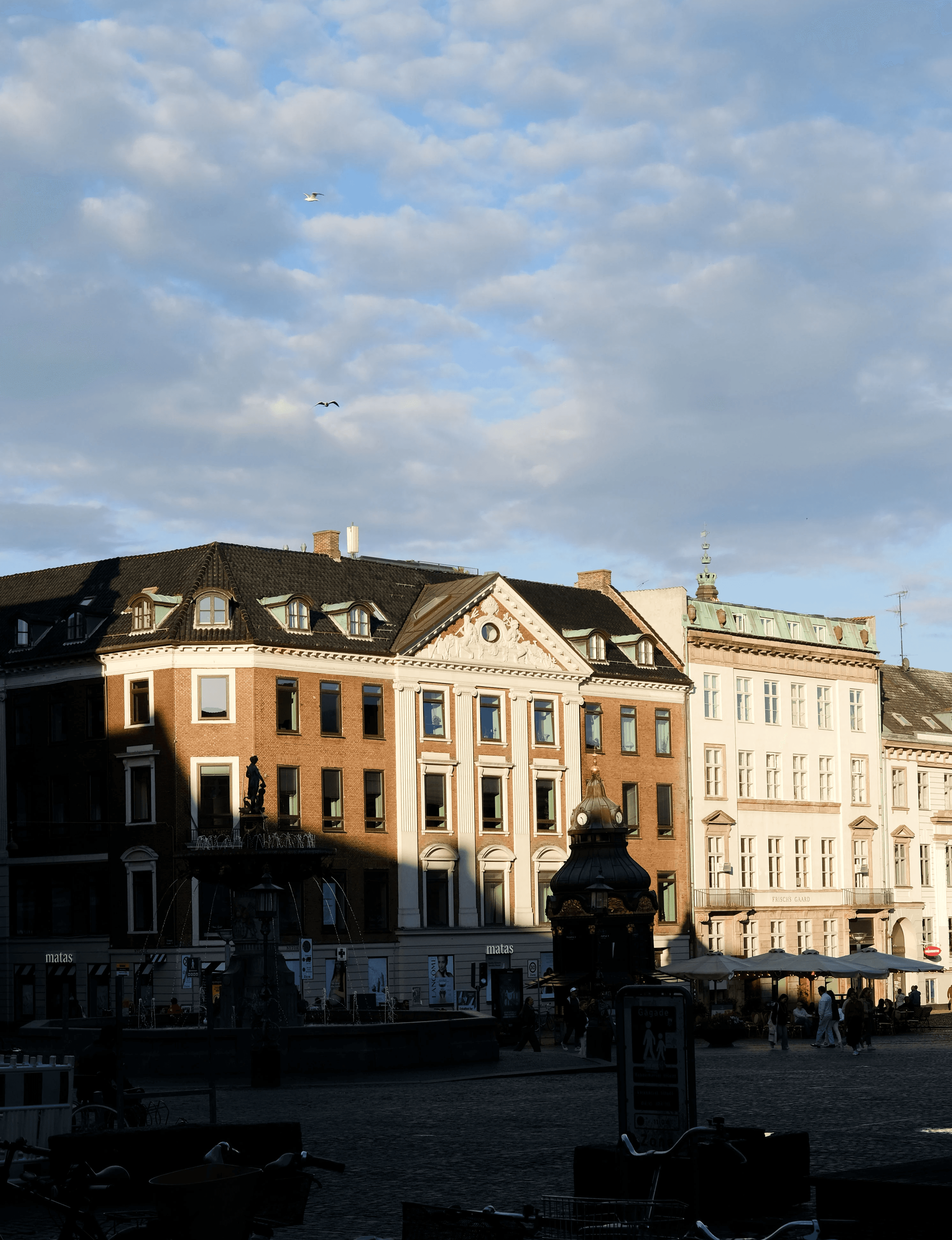
For three days, Copenhagen became a colour-coded map of design possibilities. The festival unfolded across eight districts, each identified in the app by a different colour. “Today’s the purple district,” we would say, both immediately knowing what the other meant. It was a small but thoughtful design decision that made navigating such an extensive programme feel intuitive. Guided by this map, we moved through showrooms, galleries, studios and public spaces, encountering exhibitions, talks, workshops and product launches along the way.
This year’s 3daysofdesign theme, Make This Moment Matter, felt particularly close to Casa Capie. We describe our work as being dedicated to the art of living: exploring how design, creativity and beauty can shape not only the spaces around us, but also the way we experience everyday life.
Throughout the festival, we kept asking ourselves, what do we really want to bring home from an experience like this? Not only the objects and spaces that caught our attention, but also the conversations we shared, the designers who influenced us, and the memories Carol and I created while dreaming of the studio we want Casa Capie to be.
At the time, I was reading Emanuele Coccia’s Philosophy of the Home. Coccia asks us to understand the home as more than an architectural structure. It is a world composed of objects, people, animals, plants, memories and rituals. We build our homes in order to live better, and everything within them participates in that purpose.
From this perspective, the home is never truly finished. It is constantly being shaped by the lives unfolding within it. A table can become the setting for conversation; a lamp can transform the mood of an evening; a chair can create a moment of solitude or bring people closer together. Objects are not simply placed inside a home, but become part of its dynamics and memories.


Walking through 3daysofdesign made this idea feel tangible. We encountered design through materiality, music, food, play and conversation. Each exhibition offered a different interpretation of how we might gather, rest, or simply be present. More than a display of finished products, the festival became an exploration of the many possible ways in which we can inhabit the world.
Despite the scale of the festival, the experience felt unexpectedly intimate and personal. Everyone seemed open to conversation. Meetings could begin with a question about an object and quickly expand into discussions about culture, work, daily life or the ideas we shared. This made the festival create the space for curiosity and exchange.
This openness reflects what the festival calls the democracy of design: the belief that good design should be accessible to everyone. As a not-for-profit festival that is free to attend, 3daysofdesign brings established and emerging designers into conversation with professionals, the press and the simply curious. Exhibitors gain international visibility and opportunities to connect, while visitors are invited to experience design as something shared rather than observed from a distance.
By the end of the three days, our minds were saturated in the best possible way. Yet what stayed with us was not one particular product or visual trend, but the sense that creativity can help us navigate uncertain times. Meeting physically with people connected by shared interests and ways of living created a sense of belonging to something larger than our individual practices.
For a brief moment, the festival itself felt like a temporary home, shaped by encounters, curiosity and connection. Beauty cannot protect us from the outside world, nor can design solve every crisis we face, but both can help us create places that restore us and prepare us to return to it. Perhaps making the moment matter begins by paying closer attention to what we create, the communities we nurture and what we allow to become part of our lives.

Source:
Author:
3 Days of Design — Copenhagen
Design
June 2026
other news